
The 9 Enneagram Personality Types as Children’s Books Series: Type 9 as The Story of Ferdinand
Posted: October 28, 2020 Filed under: Uncategorized Leave a comment
Enneagram Type 9: The Peacemaker= The Story of Ferdinand
“The Easygoing, Self-Effacing Type: Receptive, Reassuring, Agreeable, and Complacent” as defined by the Enneagram Institute
This post is bittersweet because I have so enjoyed brainstorming and writing this series, but I have also been looking so forward to spotlighting the NINE personality type for two reasons. The NINE holds a special place in my heart because my husband is a 9, and in fact my ma-in-law introduced me to the Enneagram when he and I were first dating, ten years ago! She was very excited to determine that I was a TWO, knowing he was a NINE because she felt it was an auspicious match, as her parents had been a 2 & 9! Secondly, as is evident by this post I wrote 7 years ago, The Story of Ferdinand is my all-time favorite children’s book. The Story of Ferdinand, story by Munro Leaf & illustrations by Robert Lawson, has long been my yardstick by which all other children’s books are measured. In its simultaneous simplicity and whimsy, it brings to life a story of contentment, pacifism, and quiet confidence and delivers a message of self love and the power of knowing yourself.
The 9 Enneagram Personality Types as Children’s Books Series: Type 8 as OLIVIA
Posted: October 21, 2020 Filed under: Uncategorized Leave a comment
Enneagram Type 8: The Challenger= OLIVIA
Type 8: “The Powerful, Dominating Type: Self-Confident, Decisive, Willful, and Confrontational” as defined by the Enneagram Institute
It is no coincidence that type 8 was the biggest challenge to find a corresponding book. I wanted to find a character who fulfilled the Challenger traits, but who cast those traits in a positive light because I think Eights are awesome! Often times assertive or willful characters are painted as bossy or ill-behaved. As I am someone who struggles with decision-making and confrontation, I admire the moxie of the 8, and needed to find a character who showcased all that strength and independence with charm. Once I remembered OLIVIA, by Ian Falconer, the decision was easy!
Boundaries, Y’all!
Posted: October 19, 2020 Filed under: Uncategorized Leave a comment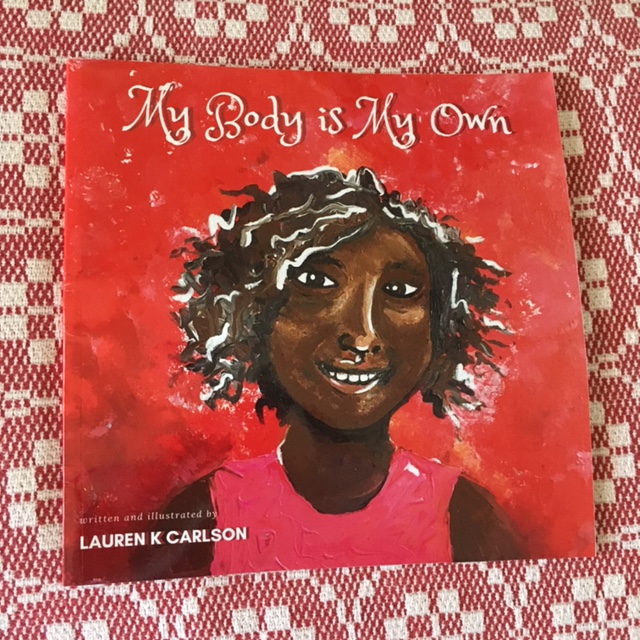
Speaking frankly and simply to children about consent and body boundaries is incredibly important. Knowing how to navigate this necessary conversation, before they are old enough to warrant one about sexuality, can be tricky. Stranger danger warnings and training is all well and good, but considering that 90% of child sexual abuse victims know their perpetrator, “Don’t talk to strangers,” is not sufficient. My Body Is My Own by Lauren K. Carlson, is an excellent, easy to read, easy to understand book, which brings to light the nuances of body ownership–such as right to privacy, privacy vs. secrecy, choice over displays of affection, establishment of boundaries, respect of others,etc. — all in a positive and helpful tone.
Read the rest of this entry »The 9 Enneagram Personality Types as Children’s Books Series: Type 7 as IF YOU GIVE A MOUSE A COOKIE
Posted: October 7, 2020 Filed under: Uncategorized 1 Comment
Enneagram Type 7: The Enthusiast= If You Give A Mouse A Cookie
Type 7: “The Busy, Fun-Loving Type: Spontaneous, Versatile, Distractible, and Scattered” as defined by the Enneagram Institute
Good things, come in small packages, and in the case of my children’s book choice to represent the Enneagram personality Type 7, If You Give A Mouse A Cookie, written by Laura Joffe Numeroff and illustrated by Felicia Bond, a tiny character, contains massive amounts of fun! I have been looking forward to this personality type and accompanying mouse, because both are so entertaining to talk about! In the story, the robust rodent goes from one activity to the next with much intensity, determination, and enjoyment. Once an activity is over, though not always completed, he moves to the next, dictated only by impulse. Whether he is having a snack, nap, haircut, or cleaning, organizing, creating, his mind is constantly moving to the next thing.
The 9 Enneagram Personality Types as Children’s Books Series: Type 6 as Strictly NO Elephants
Posted: September 30, 2020 Filed under: Uncategorized Leave a comment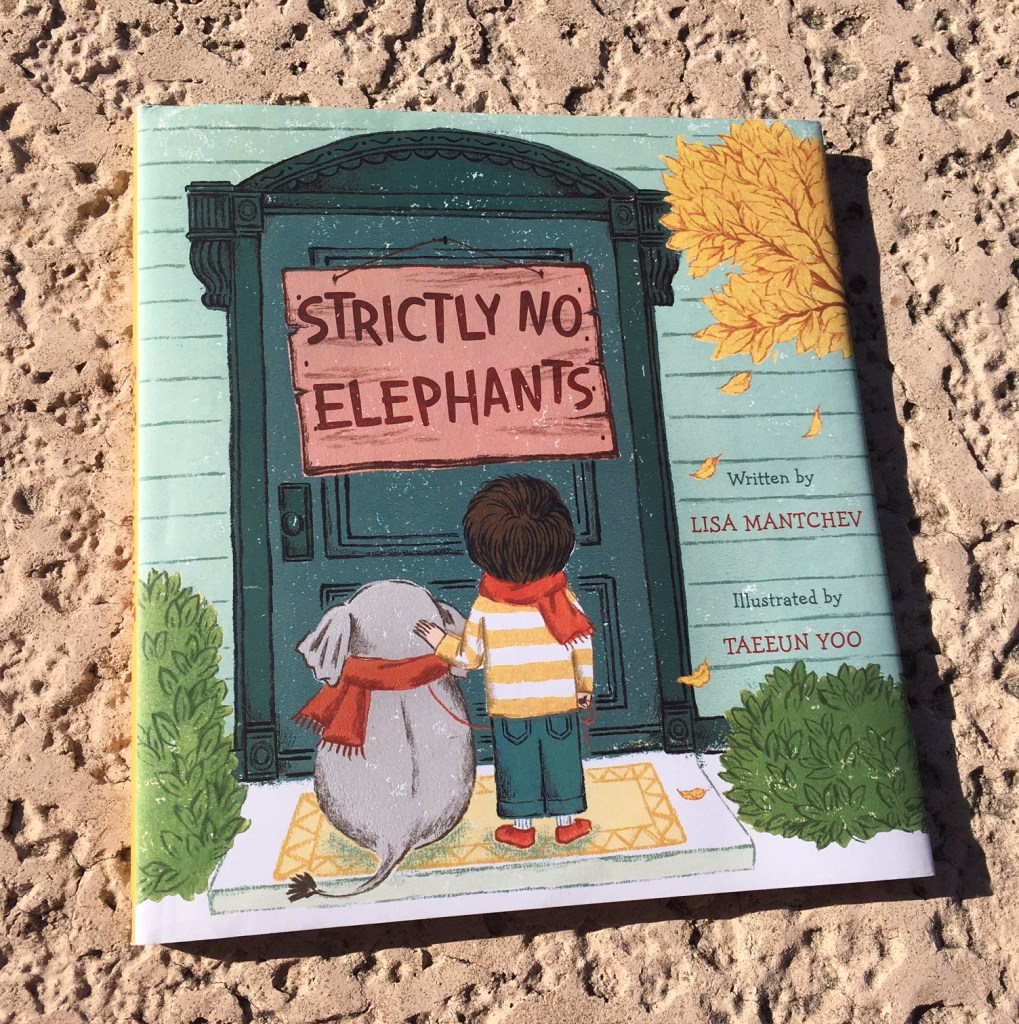
Enneagram Type 6: The Loyalist = Strictly NO Elephants
Type 6: “The Committed, Security-Oriented Type: Engaging, Responsible, Anxious, and Suspicious” as defined by The Enneagram Institute
Thus far in our series we have had an egg, a tree, a train, a wild king, a narwhal, and now with SIX we have an elephant! Strictly NO Elephants, written by Lisa Mantchev & illustrated by Taeeun Yoo, is one of my favorite books to share with children(of all ages)! The core message of inclusion speaks to the key motivations of the SIX, as defined by the Enneagram Institute in that they “want to have security, to feel supported by others, to have certitude and reassurance, to test the attitudes of others toward them, to fight against anxiety and insecurity.” In the story, I feel the Loyalist is best exemplified by the trusty pet elephant. His basic SIX desire of having security and support, is fulfilled by his friendship with the boy, who helps him over cracks in the sidewalk, and generally accepts the elephant for who he is.
The 9 Enneagram Personality Types as Children’s Books Series: Type 5 as Someday Narwhal
Posted: September 20, 2020 Filed under: Uncategorized Leave a comment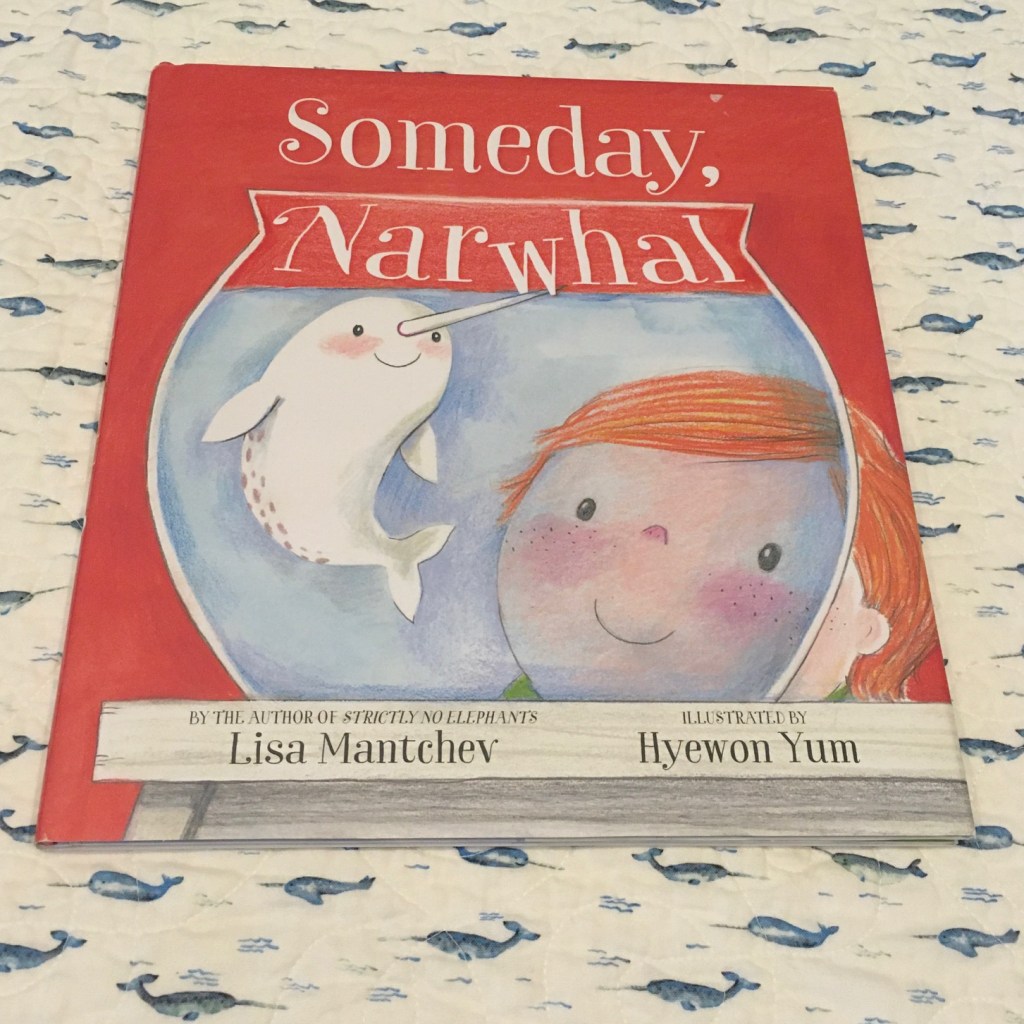
Enneagram Type 5: The Investigator = Someday Narwhal
Type 5: “The Intense, Cerebral Type: Perceptive, Innovative, Secretive, and Isolated” as defined by the Enneagram Institute.
What a day to be a 5! My choice for best example of “The Investigator” in motion, is Someday Narwhal, written by Lisa Mantchev, and illustrated by Hyewon Yum. Even the cover art has 5 written all over it. What environment is more confining than a narwhal in a fishbowl? Narwhal, as she is so named, immediately conveys a sense of isolation and solitude. She displays a preoccupation with observing and describing the space outside her fishbowl, reciting (and repeating), “Red front door. Potted plant. Umbrella stand. Piano.” This fulfills the FIVE‘s key motivations, in that FIVEs, “want to possess knowledge, to understand the environment, to have everything figured out as a way of defending the self from threats from the environment,”-the Enneagram Institute. Narwhal is curious about what could be beyond her bowl, but her interest is only exceeded by her anxiety of the unknown and the negative possibilities that may outweigh the positives.
The 9 Enneagram Personality Types as Children’s Books Series: Type 4 as Where The Wild Things Are
Posted: September 14, 2020 Filed under: Uncategorized Leave a comment
Enneagram Type 4: The Individualist = Where The Wild Things Are
Type 4: “The Sensitive, Withdrawn Type: Expressive, Dramatic, Self-Absorbed, and Temperamental” as defined by the Enneagram Institute
One of the most beloved, and uniquely illustrated, of all children’s books is the only choice to represent the enigmatic and fascinating 4! Where The Wild Things Are, by Maurice Sendak, tells the story of Max. Max is a young boy who gets into trouble and is sent to bed without supper. He retreats to his imagination to regain control of his emotions by creating a world in which he rules. The Individualist’s basic fear is to have no identity or personal significance. This story is all about Max confirming and maintaining his identity; even the boat he takes to the land where the wild things are has his name painted on the side. Once he reaches the shores of his imaginary place he conquers his feelings(wild things) of otherness, frustration, loneliness, even rage, and becomes king of all wild things(ruler of his emotions).
The 9 Enneagram Personality Types as Children’s Books Series: Type 3 as The Little Engine That Could
Posted: September 7, 2020 Filed under: Uncategorized Leave a comment
Enneagram Type 3: The Achiever as The Little Engine That Could
Type 3: “The Success-Oriented, Pragmatic Type: Adaptive, Excelling, Driven, and Image-Conscious” as defined by the Enneagram Institute.
If Twos are considered the “givers”, Threes would definitely be characterized as “the doers”. And what better literary example of strive, drive, and positivity, than The Little Engine That Could? In this classic children’s book, retold by Watty Piper and illustrated by George & Doris Hauman, a happy train filled with toys, treats and good food to eat stalls on its way up and over the mountain. On the other side of the mountain are good little children waiting, who will come to the happy train’s rescue?
The 9 Enneagram Personality Types as Children’s Books Series: Type 2 as The Giving Tree
Posted: August 31, 2020 Filed under: Uncategorized Leave a comment
Enneagram Type 2: The Helper = The Giving Tree
Type 2: “The Caring, Interpersonal Type: Demonstrative, Generous, People-Pleasing, and Possessive,” as defined by the Enneagram Institute. Read the rest of this entry »
The 9 Enneagram Personality Types as Children’s Books Series: Type 1 as The Good Egg
Posted: August 25, 2020 Filed under: Uncategorized Leave a comment

Enneagram Type 1: The Reformer= The Good Egg
Type 1: “The Rational, Idealistic Type: Principled, Purposeful, Self-Controlled, and Perfectionistic”, as defined by the Enneagram Institute. Read the rest of this entry »

